Monday, February 13, 2012

Review: Arkham Horror by FantasyflightGames

Arkham Horror Board Game
I've just played this game and ... damn ... is it epic. Now I have to pause to say, I'm not an expert at adventure board games, and I can't keep all the rules straight in my head. But i'll give you the point of view of a novice, to this game and this type of game in general.

I'll give you the story first. The general gist as I see it: an Ancient One is awakening, and its awakening is opening gateways from the otherworld (or perhaps the gates opening is what's waking up the Ancient One - I'm not sure). Anyway, when gates open, creatures can get through.

You play as an investigator, and you need to seal the gates and stop the Ancient One from awakening.


The idea is fairly simple, and easy to understand. I can't explain all the mechanics of how this is done, though, because it is an INTENSE game.


So, the quality of this game?

Brilliant. The board (the HUGE board) is colourful, filled with different Arkham locations. Along the side of the board, is the Otherworld.

The investigators stand up on little plastic clips, and the monsters themselves are little heavy cardstock pictures. I think I like the pictures better than little figures, plus you draw them randomly, so all the cardstock squares are the same size.

You also have a large card for your Ancient One ...
Cthulu! omg!

and your chosen investigator...

Investigator card...


There are also a million playing cards. What I refer to as playing card decks - there are decks for Arkham locations, decks for Otherworld locations, decks for weapons, decks for spells, decks for allies, decks for special items. They all have short but well written flavour text and they are all made of a nice, non-flimsy, shiny stock.


What about the gameplay?

The game is played in five phases for each character.

1. Upkeep stage - briefly: the upkeep for your character, refreshing any spells that exhaust, adjusting your characters stats
2. Movement - moving around the board.
3. Encounters - Either the investigator moves to a location without an open gate (and draws a card for that area) or into the otherworld.
4. Mythos - the investigator draws a mythos card, which has some effect on the board usually (e.g. all monsters in a specific location leave) and also usually opens another gate.


This doesn't sound that intense?

I know, right?  But it's the variation in all the characters, actions, monsters etc is where it starts getting tricky... and awesome.

I mean, look at the rule book!
yowza.


Let's start with the monsters. So monsters appear when gates open, or cards that have random events in them can sometimes spawn monsters.
Monster cards have a movement side and a combat side.

Movement Side
Combat side


Movement is determined by the colour of the monster card border, and the movement "symbol" on the card. The are black borders (normal), yellow borders (stationery)... the one above is a flying monster because it's blue.

Mythos Card
It's movement is determined by the Mythos card you draw... so as the pic shows, the monsters with a plus symbol move along the white lines on the board, and monsters with a moon symbol move along the black.

And that's just their movement!

Now to combat...

First step, you have to pass a horror check, which is your invetigators current skill (plus any boosts) against the blue figure in the bottom left of the combat side of the card. If you lose against this monster, you lose two sanity as indicated by the little blue circles.

Then you have to do some fightin'. So this means rolling your investigators fight + weapons or spells against the monsters lower right side number. The check is the number of blood drops on the card...

Holy shit! That's involved! And that's just one aspect of the game!


Can you win this thing?

You can. It's hard, but you can. You either have to close all the gates, or have six Elder Signs on the board to deter the Ancient One. I managed to get six signs on the board, so I didnt have to face the godthing, which is good.... cause I think that end fight will be stacked towards the Ancient One...

It's a lot easier to lose the game than win it...


In conclusion...


Yes this game has a lot of rules you have to follow, but once you get into it, once you figure out what you have to do... you start getting it. And it's fun. There's a real intensity to the game, a real sense that you are on the streets, trying to get away from monsters that are too tough to fight... you have to protect the town, not let it get overrun with monsters or the shops start closing down.

You spend the game scrabbling to get to these opened gates, trying to shut them before the Ancient One awakens! There's a real sense that you are up against the odds, and it's important for you to win, and if you do manage to win, there is a real sense of victory. A woo-hoo moment, in fact!

Just make sure you buy some plastic baggies before you open the game...

Stuff. Lots of.


Tuesday, January 3, 2012

Review: The Fall by Guillermo Del Toro and Chuck Hogen


Continuing on from my THE STRAIN review, this book keeps up Hogan and Del Toro’s story of Eph Goodweather and his team of vamp-battling white hats. We've got the average man who becomes a hero, the token girl who is the most emotional of the group (grrr I hate this trope), the wise and knowing mentor, the new hope (Eph's son), the tank... all the usual’s. Despite being tropestastic, the characters are done well, and we even get some warring gangbangers to help in the in the battle – which I liked, along with a seasoned Mexican wrestler.

So in this book, we've travelled past the "OMG vamps exist!!" part of the story and have moved on into "we must stop this terrible plague or die trying!"

The central plot focuses on stopping the spread of the usual cattle vampire infection, and also revolves around a certain ancient macguffin that will end all vampires or whatever it does.

It's a good story, it's well paced and well written, despite the fact the limelight must be shared among so many (which I had issue with in the first book). In face I still haven’t shaken the idea that these books are merely an accompaniment to the movie they really wanted to make. Perhaps it feels this way because of Del Toro. Anyway, I don’t find the head hopping so obvious in this one, or maybe I just got used to it.


It’s the middle book in a trilogy, and because of this it does fall into the usual trouble of having a plot that can’t progress too far. However, lessening the emphasis on the plot (and now knowing the vampire physiology from the first book) this novel is really more of a character study. I know at the end of my last review I hoped for more forward motion, but honestly, I really don't mind spending time with these characters.  

Perhaps this is why I didn’t mind the head hopping… it wasn’t getting in the way of anything this time.


At any rate, I am ordering the last book in the trilogy – THE NIGHT ETERNAL – as soon as I have some money.

Sunday, July 31, 2011

Review: The Divine Comedy, Dante (Barnes and Noble Leatherbound Edition)

Note: I'm not reviewing the content of Dante's Divine Comedy today, just the external packaging.

Barnes and Noble have been releasing leather bound (bonded-leather bound) editions of particular classics. THese can include singular books, like Dracula or the Picture of Dorian Gray or collections, like Chronicles of Narnia or Grimm's Fairy Tales. I picked up the Dante edition in a nice red bonded leather. I believe "bonded leather" is actually particles of leather and other materials mixed together, but the effect (at least on my copy) is quite classic-looking.

Pictures below...


This is a fair representation of the colour of the cover.The black designs don't stand out as much as they do in the flash here, but are very visible (and pretty). The title, "Dante" and some design are completed in shiny gold-look.


I love the look, and even the gold edging on the pages - even though I doubt it will last long with the rate it is flicking off on my fingers. The pages are quite stuck together though, so I had to flick back and forth to seperate them all.

The only think I don't love is the design right in the centre. It doesn't keep in with the rest of the "look", which is a classic gold, red and black motif. The design - which I think is a sticker - is too colourful for the book. Even inside the book is very classically designed so Im not sure why they thought sticking a colourful sticker in the centre of the cover was a good idea.
I don't hate the cover, I quite like it still, but I think the centre inlay was a bad idea.


Continuing with the cover, this is the back. The design on the back is beautiful, depicting a swirl up from inferno to a gold topped paradiso. I don't know why they didnt try for something similar on the front cover.


This is the inner cover.


This is a sample of one of the pages. Barnes and Noble went with Henry Wadsworth Longfellow's translation, which I don't mind. I think I originally read John Ciardi's in early high school, but I can't be sure! I don't have a copy of John Ciardi's though. I have Mark Musa's translations in a penguin classic, but I don't particularly like any of them over the other. Perhaps if I read them one after the other...


Now the main reason I wanted this copy is that it has Gustave Dore's illustrations inside! I'm not sure how many illustrations are inside the edition, but they are plentiful, and make the edition worthy of buying themselves! (click to enlarge)


All in all, the edition is a great addition to your bookshelf, the only real downside being the central sticker-thingy on the front cover (and if you dislike HWL)

I would definitely like to get more of these editions. They are not rare, but they are a definite book-lovers indulgence.

Thursday, July 21, 2011

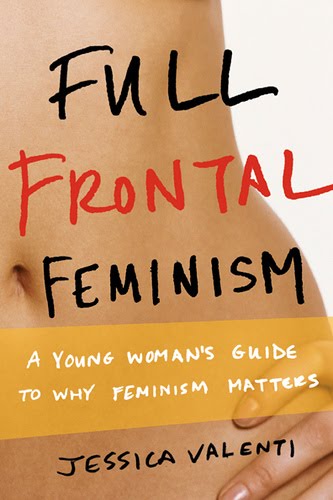
Review: Full Frontal Feminism by Jessica Valenti


https://blogger.googleusercontent.com/img/b/R29vZ2xl/AVvXsEjfiVaE4zJhqGQBUWEo2UmmkRn2Cv64chSgWde7sb1yxuJRcJBYLrVEhwzzHYZrsroFxrvs04i2one8HgeCmQnp6udntAD0z6BhH_gTnbYZf_fud5BLRgMpAB-jHzB2Ik5R3jZOouvNI7Q/s1600/Full+Frontal+Feminism.jpg 


Jessica Valenti knows her shit. She does. In Full Frontal Feminism, she explores the relatively new idea that feminism does have a new face, and they face cops a lot of judgement, even from other women. And I wish it wouldn't because OBVIOUSLY, it's the exact opposite of what we need as a society. 

Women against women has always pissed me off. I don't believe we''re all sisters in arms, that's just as much as an "us against them" idea as anything else. 

But to have some feminists against OTHER feminists, some feminists saying that other feminists don't know enough, don't have the "right" values, don't "understand" what feminism is about - that's INSANE.
Because feminism is about being equal. It’s about fairness and equality for everyone, women and men. And Valenti really expresses that. Feminist against feminist goes against the basic ideals of feminism – and it’s a problem I’ve encountered!

She writes that, sure, heels and makeup make women look sexier by today’s definition of “sexiness” – but if you like to, wear those heels! If you don’t want to, DON’T! Awesome :D I agree with that. 

What I loved about FFF was that I already believed most of the ideals she writes about – but I couldn’t define those ideals I had. Valenti discusses with clarity those furry feelings of wrongness I had. E.G. she poses the idea of a “rape schedule” wherein women walk to their car with their keys in their hands, ready to attack the boogeyman where he may jump out of the bushes. I do this. I know a lot of women who do, but Valenti really clarifies what’s wrong with that, and what it means to our society as a whole.

Is this a good book?
For me, definitely. Read it in three hours, couldn’t put it DOWN good book. Valenti writes with appropriate humor about the subjects she covers, and colours each with personal stories and anecdotes. The book is a joy to read, and for me, made me feel like I had a person on my wavelength. 

Valenti definitely has a new fan in me. Who doesn't love a cool, smart woman?

Pick up the book, regardless of your gender!


Valenti’s site: feministing.com

Thursday, June 9, 2011

Review: The Bedroom Secrets of the Master Chefs by Irvine Welsh

This is not a new review. This book is coming up to it's fifth birthday, but damn... it's a good book!

The Bedroom Secrets of the Master Chefs: engrossing,
rewarding and fun.


Irvine Welsh - best known as the guy who wrote Trainspotting - delivers what I believe is his best story to date. Better than Filth, which included monologue by a tapeworm in the protagonist’s gut. And The Bedroom Secrets of the Master Chefs is a re-imagining.

And if you'd believe it, it's a re-imagining of Wilde's Picture of Dorian Gray.

The book follows Danny Skinner, a ruthless character with his lips wrapped around a bottle and a finger in every girl he meets (excuse the language). Danny believes a famous chef impregnated his mother, and Danny is focused on proving it. That's his mcguffin, and it drives the plot forward even while Danny succumbs to his alcoholism.

The secondary character is shy and "pure" Brian Kibby, of course the polar opposite to the Danny. Every aspect of Brian is everything Danny lacks - though he can't admit this, even to himself. From the moment Danny meets Brian at work, he dislikes him immediately. And when quiet Brian shows a booze-debilitated Danny up at a meeting, the dislike turns into incandescent hatred. Danny curses Brian, and that's where the re-imagining begins.

From that point, Danny finds himself mysteriously without hangovers after drinking and coke binges while Brian is growing more and more ill. It dawns on Danny that Brian's illness coincides with his own impossible wellness, despite his lifestyle. (like the portrait in Dorian's attic?)

So Danny participates in more and more debauchery, indulging in hedonism and inflicting his consequences on Brian to the point of near death.

I won't spoil the ending, but I will cut the book into my three points: Characters, Plot and Atmosphere.

  
Characters:
Spot on brilliant human characters, but we are talking about Welsh here. Danny is a bastard of the highest Welshian order, so you'd expect him to be ruthless and without heart, until Welsh reveals his human side. And sure enough, it happens. Welsh is an author that can show you the humanity inside the despicable. And in this instance, the despicable inside the "pure"

Plot:
Well… it’s a re-imagining of (debatably) once of the most brilliant books of all time. Don’t let my review fool you into thinking you know what will happen, Welsh has overlaid an engaging, deep story over the old psalm.
The story is fast and involving, and you need to find out what happens next. It's a work of deep emotion, overlaid with black comedic acid.

Atmosphere:
Bars and booze and Edinburgh. Rough and raw and as vivid as any other Welsh work. You can hear the accent in the dialogue, and you can smell the smoke. 


I can’t say anything more apart from clever, clever Welsh, and find this book to add to your collection.

Thursday, March 3, 2011

Review: The Strain by Guillermo Del Toro and Chuck Hogen

Note: THE STRAIN is part one of a trilogy.


Woo woo vampire books by my favourite director?? Totally snapped that up as soon as I could find it!

I summarise THE STRAIN as a mix between zombie and vampire fiction. So the vampires aren't those sweet sparkly or sexy kinds that you find in fiction alot of the time, these vampires are... well they're like the vampires from Blade 2.
 Remember them? The Reapers... I think that's what they were called (or am I getting confused with Firefly??) They ate normal vampires, and in doing so, spread the virus from body to body, creating overwhelming numbers of these nasty vamps. This idea, this outnumber idea, is usually found in zombie fiction, but it works well for animalistic vampires as well. That’s why I’m calling it a mix.

To start off, I love Guillermo. I've loved him since I watched Blade 2 with the commentary on. He loves his monsters, and that comes through in this book.  These monsters are LOVED, they have been thought about long and hard so there's a lot of what I call sci-babble, in which they attempt to explain how a vampire would work medically. Not so much of a fan of sci-babble – but the vampire theories are fun here (the virus mutates the organs, they become more batlike so the vampires defecate a batlike guano full of proteins), so they kept my interest. (again, recalling Blade 2, with the reaper autopsy)

The plot in a nutshell, is that a plane lands at JFK airport, everyone inside is dead, and the CDC are called in to explain why. It turns out it’s vampires. That's not a spoiler; it says it on the back of the book. This is a vampire novel.

Keeping that in mind, it takes 100+ pages for the vampires to show up. I mean, it was fast paced and all, but I felt a lot of filler for those first hundred pages. First we're looking at the airplane through the tower, then we're approaching the airplane with the baggage loader, then a new point of view of a CDC guy at home with his kid talking about his marriage, then the CDC guy heading to the airplane, then the baggage handler again, then what felt like fifty pages about an eclipse - viewed from a space station, and a ballgame, and some random people on the street.
 Now, when I say "viewed"? I mean we're head hopping. We as a reader are taking flying leaps from character-head to character-head. It was a little awkward, I mean I'm sitting there thinking "Where are the VAMPIRES in this VAMPIRE book, Guillermo??" and we're switching POVs about random people, sometimes only staying with a person for less than a page.
This might work for movies, I'm yet to be convinced it works for books.

It was so weird at first that it actually took me a while to figure out who our major players are. I thought the baggage handler was going to be a vampire killer, but no, she gets two close-together chapters and then ... bye. Okay. And we don’t meet one of our MAJOR players until, I'm sure, about halfway through the book. And I didn’t take much notice of him because I thought he was just going to be a random POV.

We jump into an astronaut’s head, so she can tell us that the eclipse is creepy from space. I mean... why? Sure it’s creepy, we get it, you told us this with what feels like six other characters and we're never see this character again? Why should I care that she thinks the Earth is creepy with a shadow on it? Wouldn't it have been a good move to use the POV of the major players?

We ended up with FOUR major characters (not including the other head-hopping), one main character - the CDC guy, and the main antagonist.

Jumping between four people's heads is hard enough, then we have the main and sub antagonists, plus the interludes which take place in the past, and on top of that, all the other random POVs - like, is it enough already? Do we have enough scene changes? 

I felt unable to focus for the first third to half of the book. I don't mind head hopping, but you have to have a reason to do it. Simply because you want to tell me the eclipse looks eerie from space is not enough of a reason to disconnect me from who I'm supposed to be caring about - i.e. CDC guy. (I know it was only a throwaway page but I remember it because it was so incredibly jarring. I started thinking "do the vampires come from space?")

HOWEVER! Having said that, the book starts to gel (about the time the vampires show up) about 150 pages in. We still have head hopping, but it seems purposeful, we hop into people’s lives to experience the result of the infection and the ramifications. And when that’s done, we start just sharing our time between the important people and that’s when THE STRAIN grows some whiskers and becomes a GREAT book.

It’s really good, the vampire theories are fun, it’s scary and creepy, unsettling and exciting. Plus they throw in some ancient vampire mythos. All the things you want out of a vampire book! If only they’d sped up and pruned the initial, confused beginning.

I’m going to buy the second book THE FALL, which is out now. Now that all the characters know what’s going on, I hope we can keep the speedy forward motion, with all head hopping leading us towards a final, melded conclusion.

Saturday, February 26, 2011

Review: On Writing by Stephen King


What is it about Kingy? I love him. I really do. He can write a story for billions of people and make it seem like he is in the room with me, in the chair across from my computer, with a beer in one hand and my dog sitting on his shoes.
He's so damn... accesible. And from someone who has written about everything from giant maneating spiders, to nazi-wannabes, to prison inmates, to murderous husbands... being accessible is one HELL of a skill!

Who wouldn't want some tips about writing from Stephen King?

This book isn't fiction, it's a memoir. It starts off with his stories from childhood, and morphs into a reader-friendly breakdown of The Elements of Style (E.B White and William Shrunk Jr.) While Elements is great as a revisionary tool, King's On Writing is a good way to see the elements in action.

He gives examples of what works and what doesn't. He does this in a general "you should be honest with your writing" way, all the way down to "see how adverbs kill this passage" way. Very handy.

He points the way to get more information on anything if you need it, uses personal experience to guide his answers and advice, and just gives easy tips to sharpen your quill.

One thing stood out for me though, and I mention this with a grin on my face; King advises that his characters take on the novel, and simply act on their own merits, and the storyline plays out from their interactions. That's why, and he alludes to this in Writing, many of his books are based on SITUATION and REACTION. There is a situation, and the book is about the character(s) reaction to that situation.

Now, sometimes this works and sometimes it doesn't.

Desperation, this book is all reaction to a situation. And I read it, and I struggled with all the character POVs and it ended and I felt nothing. It didn't affect me at all. I'm not against what I call "character studies" (and I'll go into that a little further), but to please me they need to be tempered with some forward motion too.

Kingy's one of my favourite writers, hands down and tickets ripped, but sometimes his books don't land properly and I'm now attributing this to the fact he doesn't believe in plotting it out too much. By land properly, I mean end properly. This is in my opinion of course.

Rose Madder, definitely one of my favourite books, ends so strangely - it's reaction, not plot. Rosie's reaction to the initial situation is the main drive of the story. AND it's amazing! But the wrap up is odd to me - I won't spoil it, but pick it up, I know you'll see what I mean. The story-plane lands like it's hitting a cross wind on the runway.

Kingy also mentions that Rose isn't one of his favourites, because it was so heavily plot driven. I found that completely at odds with the book i've read about 20 times, if anything I would say Rose lacks plot because it's a character study. When I say character study, I mean this: the book is about Rosie. Rosie runs from her husband and rebuilds her life. To me, that's not plot driven. In a plot driven story, "Rosie runs from her husband and rebuilds her life" would be the start, leading onto her becoming a spy, or finding her true calling as a policeman, or solving a murder or something.
I have to stop talking about this book, that's for another day.


/digression


IT - this is another one that has that landing trouble. It's all going well, gelling together, and then suddenly the girl character (can't remember her name right now) sleeps with all the boy characters and IT's a giant spider or something. I still don't get it. It might be user error of course.

Sometimes SITUATION and REACTION work amazingly! See Firestarter. Amazing beginning middle and denouement. Characters are fleshed out with no problem, the story is a first class flight and a landing on a summer's day with no breeze to be felt.

See Misery, see Cujo... See mostly anything he writes. But sometimes, and just sometimes, his landings are off for me.

Anyway, I only mentioned the stories because of what Kingy wrote in Writing and I need to wrap this review up.

The memoir is a great tool for any aspiring writer, and a great way to get some answers to some FAQs. Kingy gives some amazing advice and lessons in the book, and most of all, he gives the advice in an inspiring and encouraging way.

Stephen King is so often unsung, when really he is just a great writer. Just because he's ACCESIBLE DAMN IT, just because everyone, even your twelve year old cousin reads him doesn't mean he's not amazing. Not everything that is popular is as vapid as Justin Bieber or Jersey Shore. Stephen King is definitely not dull, he can just reach people. And that's what writing is about, right?